
6 Warning Signs Your Dryer Vent Is a Fire Waiting to Happen
March 9, 2026 · Houston Air Pure Team
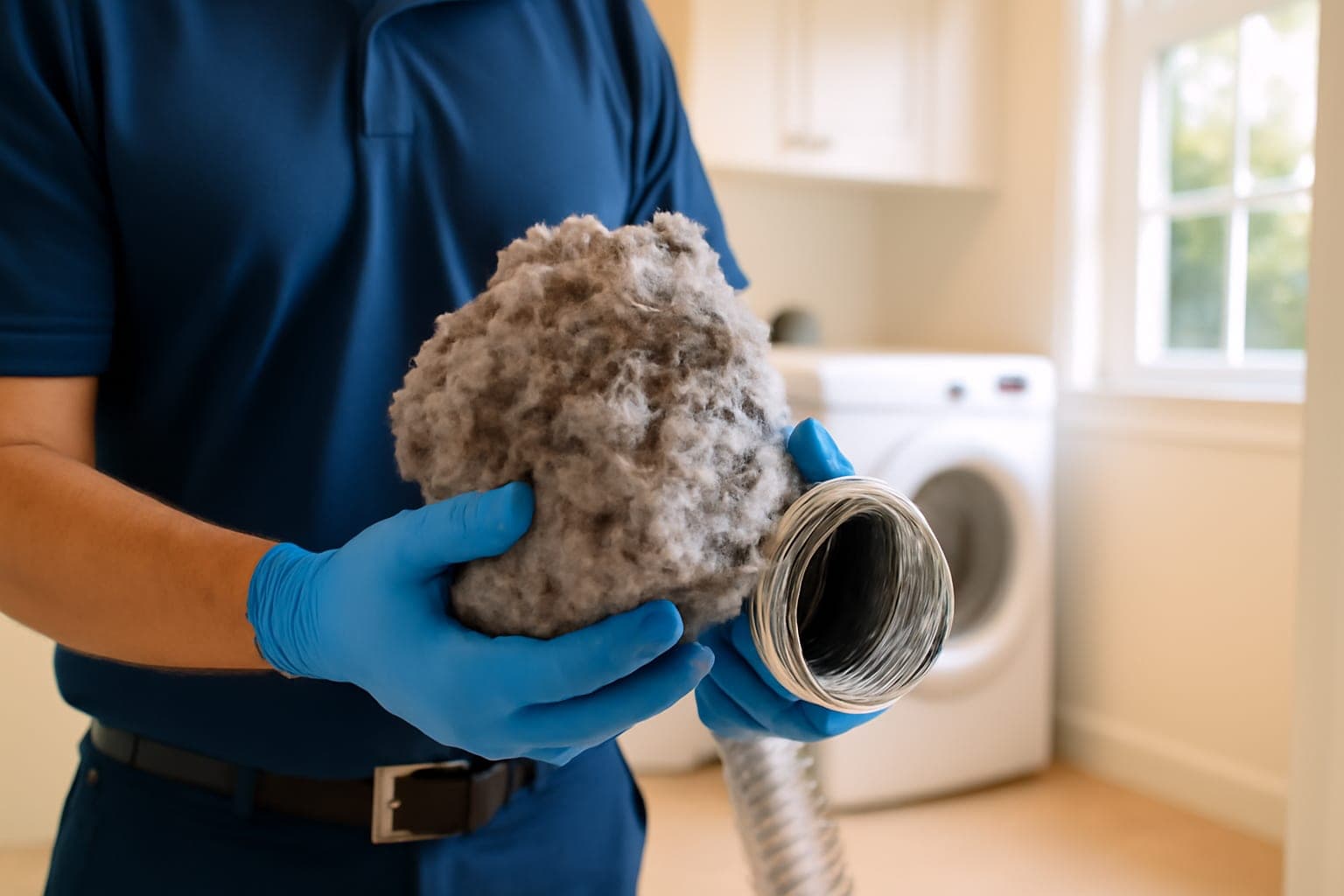
Around 2,900 home fires a year in the U.S. start at the clothes dryer, and the leading cause is the least dramatic thing imaginable: lint that never got cleaned out. Not faulty wiring, not old machines — lint, packed into a vent line, sitting inches from a heating element that runs at 130–150°F.
The good news is that dryer vents almost never go from fine to dangerous overnight. They telegraph the problem for months. Here are the six signals, ranked from 'schedule a cleaning' to 'stop using the dryer today.'
The Six Signs, Ranked
Sign one — clothes take more than one cycle. The most common and most ignored. Your dryer isn't getting weaker; its exhaust path is closing. When airflow drops, moisture has nowhere to go, so the machine just tumbles wet clothes in warm air. Schedule a cleaning.
Sign two — the top of the dryer or the laundry room itself gets noticeably hot. Heat that should be leaving through the vent is staying in the machine and the room. Schedule this week. Sign three — a musty smell on 'clean' clothes. Moist air lingering in the drum breeds mildew. Same cause, same fix.
Sign four — little or no airflow at the outside vent hood while the dryer runs. Put your hand near it: you should feel a strong, warm stream and see the flapper held open. A limp trickle means the line is mostly blocked. Sign five — lint accumulating around the door seal or behind the dryer: the exhaust is backing up and escaping wherever it can. Both of these mean cleaning now, not next month.
Sign six — a burning smell during operation. That's lint contacting the heating element or motor. Stop using the dryer, unplug it, and get the vent line and machine cabinet cleaned before the next load. This is the one people push their luck on, and it's the one that starts fires.
Why Houston Homes Clog Faster
Two-story Houston homes routinely put the laundry room in the middle of the house, which means the vent line runs 15–30 feet through walls and attic with multiple elbows — every bend is a lint trap. Even more common here: roof-terminated vents. Builders love them, lint hates them. Pushing exhaust straight up fights gravity, the roof cap screens catch lint, and nobody ever looks at them because they're on the roof.
If your dryer vents through the roof and it's been more than a year, assume there's buildup. We check the cap, the full line, and the transition hose behind the machine — where most of the crushed-duct problems hide. Flexible white plastic hose behind a dryer, by the way, is against code for a reason: it kinks, it traps lint, and it burns. If we find it, we'll show you and replace it with semi-rigid metal on the spot.
The One-a-Year Rule
The U.S. Fire Administration's guidance is simple: clean the vent line once a year, more often with big families, pets, or long vent runs. A standalone dryer vent cleaning in Houston runs $100–$200 and takes under an hour — bundle it with duct cleaning and it's less. Against a $500 dryer, a $2,000 insurance deductible, or the other thing, it's the cheapest fire insurance you can buy.
Recognize your house in sign four, five, or six? Call today — dryer vent cleanings are usually our fastest same-day slot.